
The Ohio Foundation of Independent Colleges (OFIC) held its Fall Trustee Meeting at Baldwin Wallace University. The board handled its regular business, including its consent agenda, and then turned to a focus on student success and the path from college to career. Campus leaders joined in person and on Zoom.
Student voice
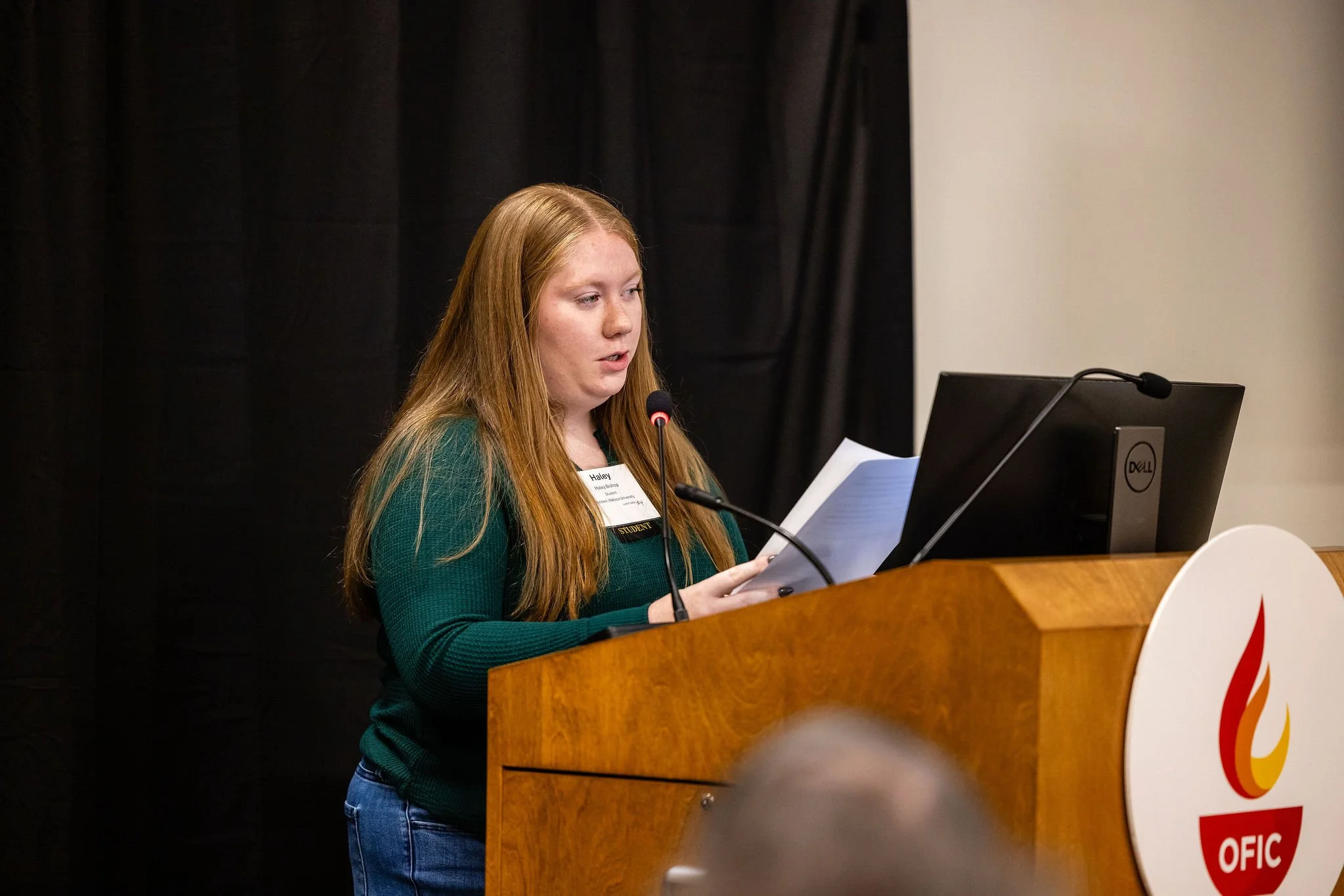
The meeting opened with a student speaker, Haley Bishop, a neuroscience major with an entrepreneurship minor at Baldwin Wallace. Bishop is a first-generation college student and a former foster youth. She is a recipient of the Charlotte R. Schmidlapp scholarship.
She told the room that higher education once felt uncertain to her. Her campus mentors pushed her toward opportunities she had never imagined for herself. She founded Baking for the Brain, an initiative focused on mental health awareness, and she thanked OFIC and its donors for making her education possible. She also asked attendees to thank the campus dining staff, whom she called among the school’s most valued workers.
Keynote: Shawn VanDerziel, NACE
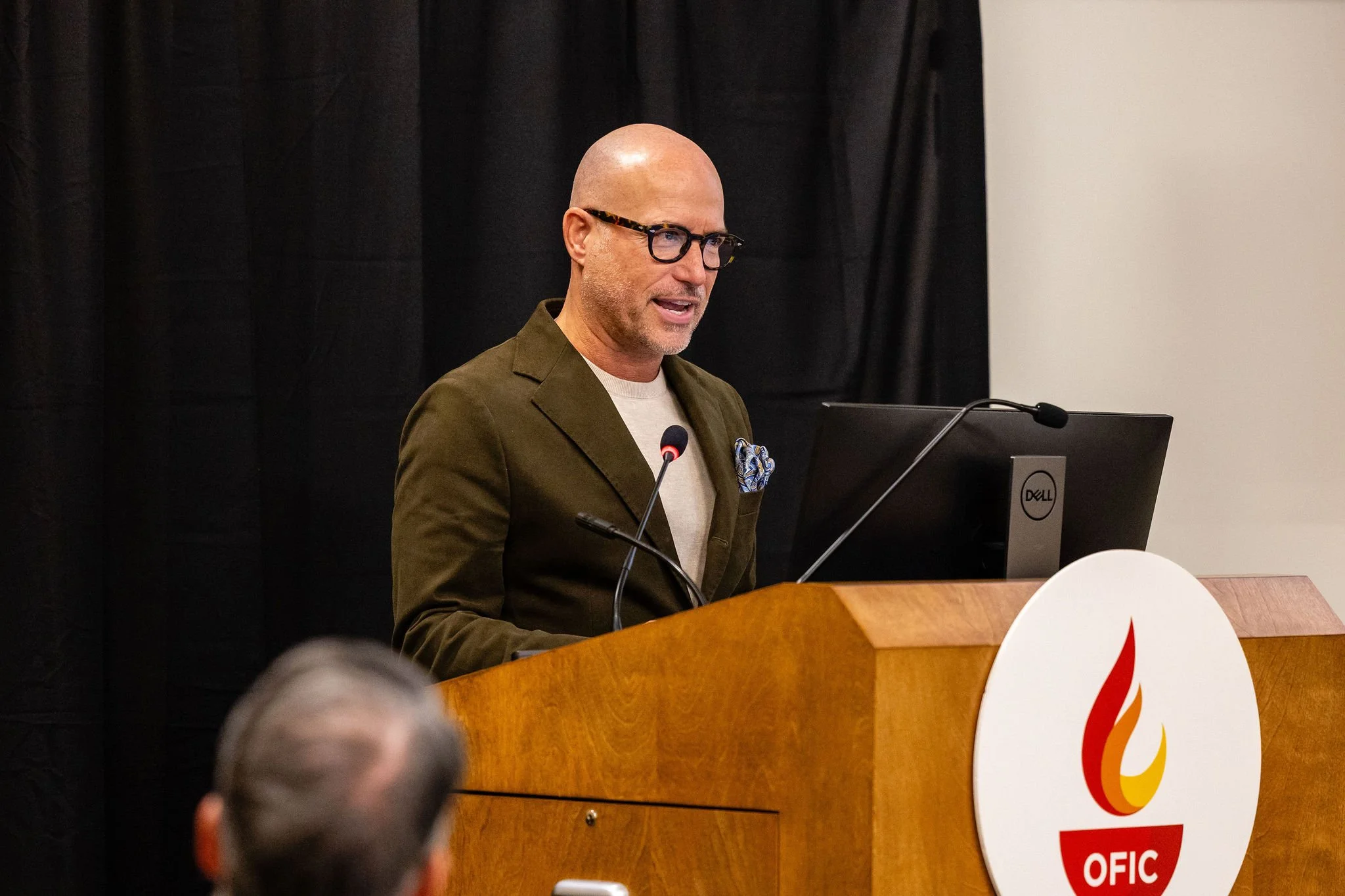
Our guest speaker was Shawn VanDerziel, president and CEO of the National Association of Colleges and Employers (NACE). Before NACE, he was chief human resources officer at the Field Museum in Chicago. There, he built an internship program of about 300 interns a year. He also helped shift most of those positions from unpaid to paid, using funding from about 65 sources.
VanDerziel’s central message was that the labor market is in a cautious period. He cited an unemployment rate of about 4.1 percent in September. Job postings have fallen back to about their 2019 level. Employers are holding back on hiring because of economic uncertainty, tariffs, and expectations about AI. That means fewer entry-level openings and more competition for the ones that exist.
Several findings stood out:
Internships drive hiring. Recruiters rank internships as their best return on recruiting investment. Companies offered about 72 percent of their interns full-time jobs, and 88 percent of those offers were accepted. Former interns were about 30 percentage points more likely than non-interns to still be with the company a year later.
Students want in-person work. Most recent graduates prefer in-person or hybrid jobs over fully remote ones. Employers are largely not offering fully remote entry-level roles.
Skills matter more than majors. Employers increasingly look for proof of skills like teamwork, problem solving, and communication. GPA and major alone carry less weight. Technical skills rose to the top of one recent ranking.
Students and employers see readiness differently. Students rate their own skills higher than employers rate them. For the first time in NACE’s most recent survey, that gap flipped in one area: technology, where students rated themselves lower than employers did.
Students are turning to AI for career advice. About 15 percent of students said they get career advice from AI. VanDerziel said campuses need to address both the quality of that advice and the lack of guidance on using AI responsibly.
VanDerziel urged campuses to deepen employer relationships, expand access to experiential learning, and treat career readiness as everyone’s job, not just the job of career services. Career services staff often serve thousands of students each. Faculty are a trusted source of career guidance, but many feel uneasy advising outside their own fields.
Audience questions
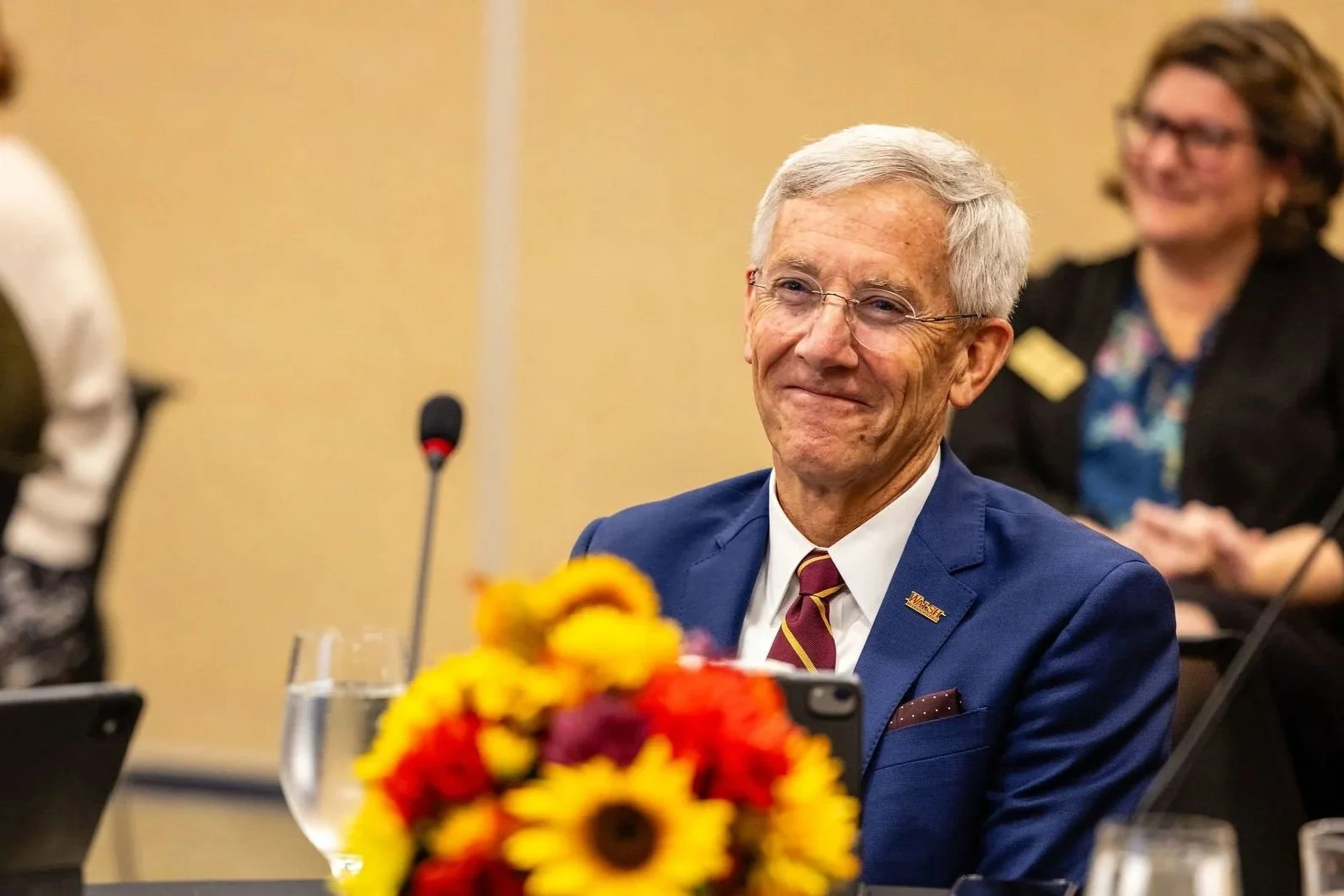
Attendees asked whether the hiring slowdown reflects industry-wide trends or individual company choices. VanDerziel said it varies widely within each industry, and that large companies are leading the growth. Attendees also asked how to handle fake job postings and fake candidates. He estimated that 5 to 15 percent of postings are false. On the long-term effect of AI on professional work, he said the labor market is still confused, and that leaders are weighing efficiency gains against the need to keep building a future workforce.
Session Takeaways
Entry-level hiring is cautious, and employers are leaning more on internships and experienced hires.
Paid experiential learning is one of the strongest bridges from college to career.
Students need help putting into words the skills they build in class and outside it.
Every part of a campus has a role in career readiness, including faculty and staff outside career services.
Colleges have a chance to lead on responsible AI use.
A thank you to our hosts and scholars
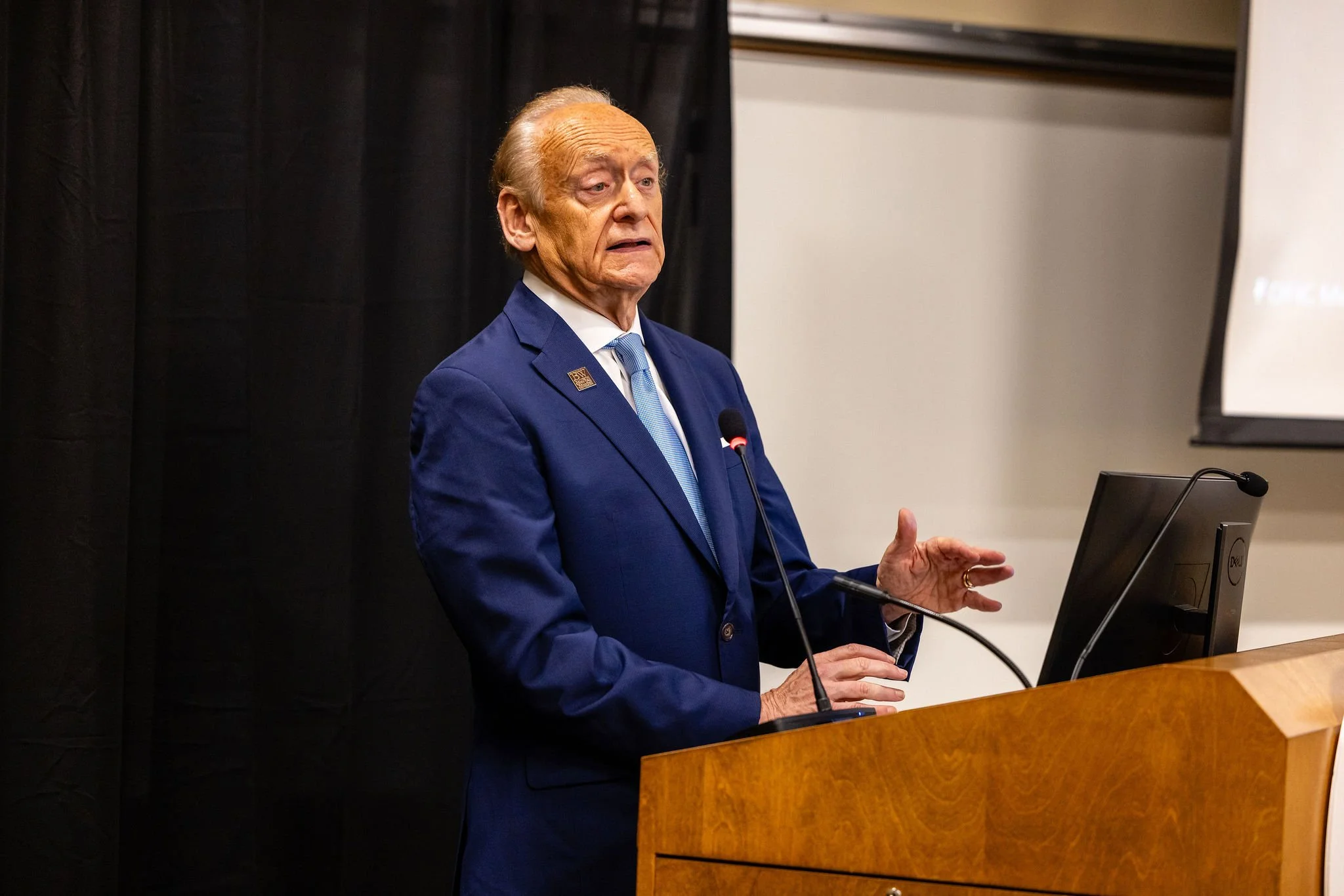
OFIC extends heartfelt thanks to Baldwin Wallace University President Lee Fisher, who hosted a wonderful luncheon for the day’s guests. We also want to thank the students who joined us and shared their stories. Their journeys show what is possible when students have support, and we are grateful to every donor and partner who makes these scholarships possible.
Our scholarship recipients in attendance were:
Konner Hines, Burton D. Morgan Foundation
Haley Bishop, Charlotte R. Schmidlapp Fund
Peyton Van Gilder, Charlotte R. Schmidlapp Fund
Natascha Trunko, Jane D. White Fund #2 Scholarship
Jamie Small, Waterford Bank N.A.
Daira Martinez, Council of Independent Colleges
Annel Hodges, Sherwin-Williams Company
Marissa Dombrowski, Sisler McFawn Foundation
Titus Baskerville, Burton D. Morgan Foundation
Afternoon session: From College to Career
OFIC welcomed more than 60 attendees from member campuses and corporate teams across Ohio to the afternoon session of the Fall Board of Trustees Meeting at Baldwin Wallace University. The session featured Shawn VanDerziel, president of NACE, who expanded on the morning’s topics and focused on connecting higher education and employers.
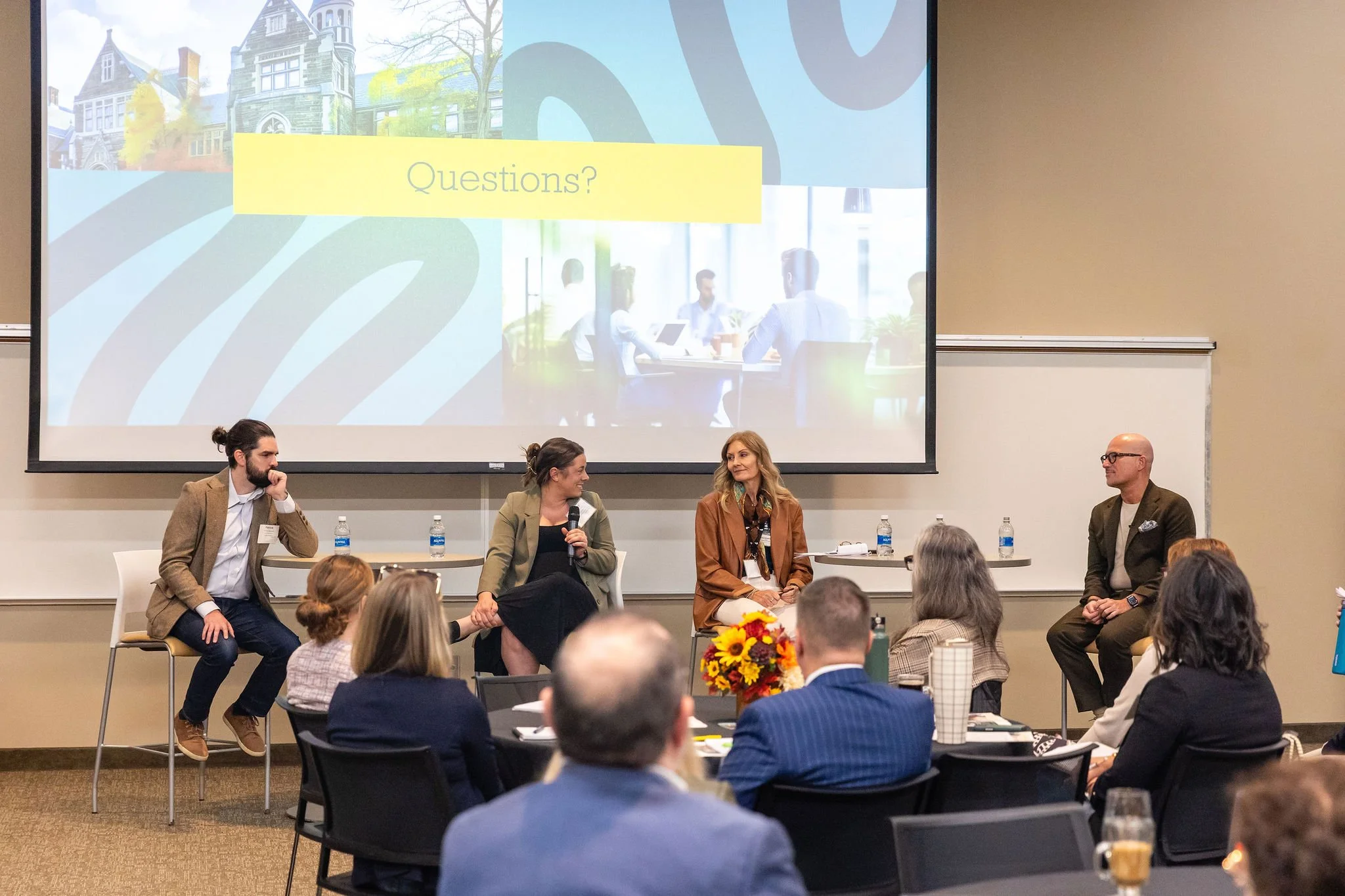
VanDerziel highlighted the value of work-based learning and the shared role that colleges and employers play in preparing students for their careers.
A panel discussion followed. Andrea Domachowski of Ohio Northern University and Patrick Gibboney and Lindsey Parker of Sherwin-Williams talent teams explored employer expectations, work-based learning, and AI in the workplace. The panelists talked about how students can explain their AI experience to employers, and how organizations are building AI into their work and job descriptions.
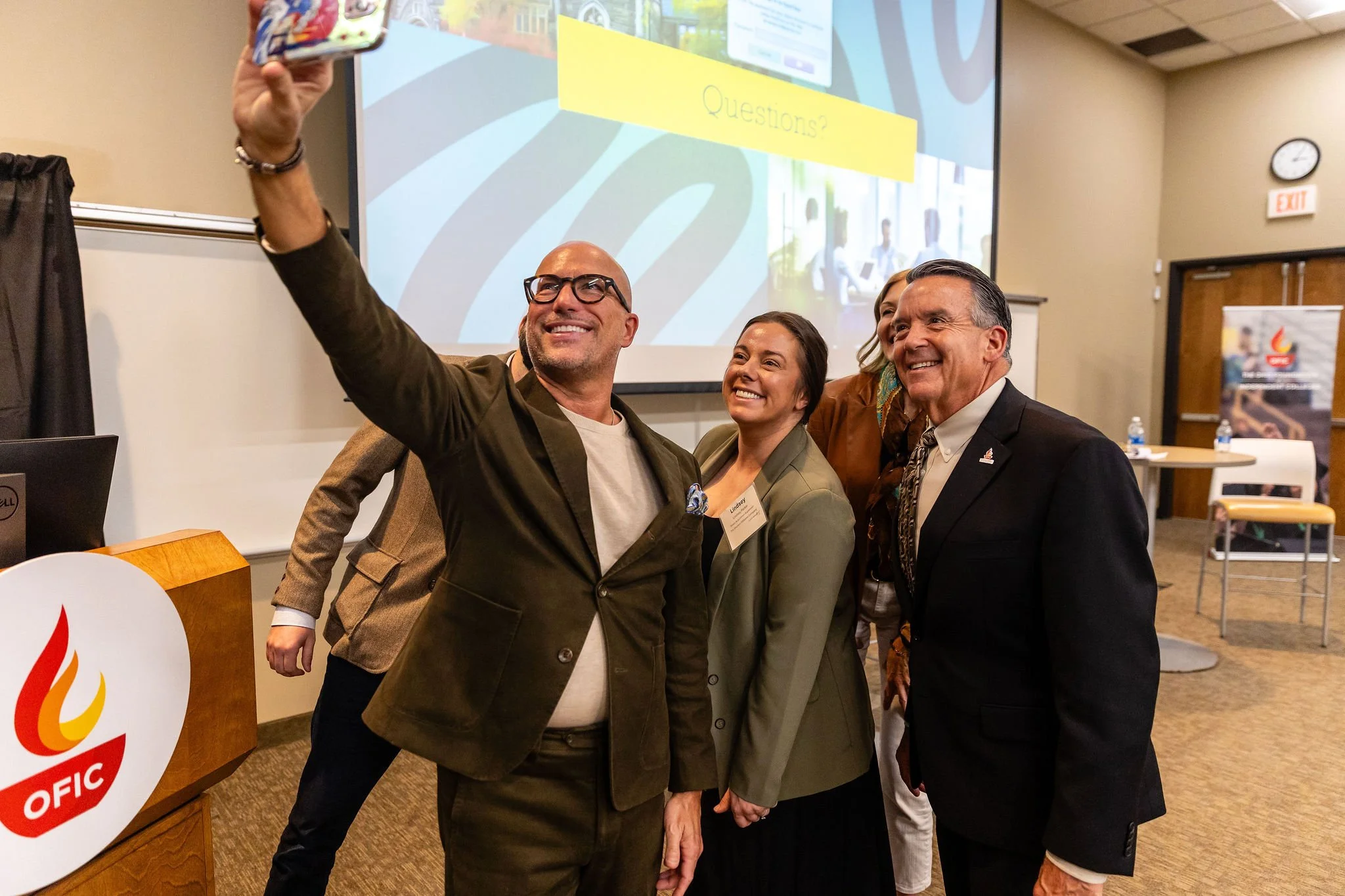
Thank you to everyone who attended, spoke, and helped make the day a success.